Our refreshed logo: the story behind the image
In anticipation of the Alliance’s fifth anniversary this year, we’re thrilled to share our newly-refreshed logo with help from original logo artist Weshoyot Alvitre.
Over 700 generations ago, Támal-ko/Coast Miwok people lived in deep connection with the cycles of seasons, the waters, winds, currents, and the plants and animal relatives that lived alongside them at Tamal liwa.
Even though colonization brought chaos and destruction, the Felix Family ancestors managed to survive and continue to be in relationship with their homelands despite the disruption and enslavement from Spanish Missions followed by forced labor on Mexican and American ranches. When their labor was no longer needed they were forced out by gun point and/or California laws.
We created the Alliance to return this stolen land to Indigenous care – and to create a place of healing and renewal where all can deepen their connection to Mother Earth.
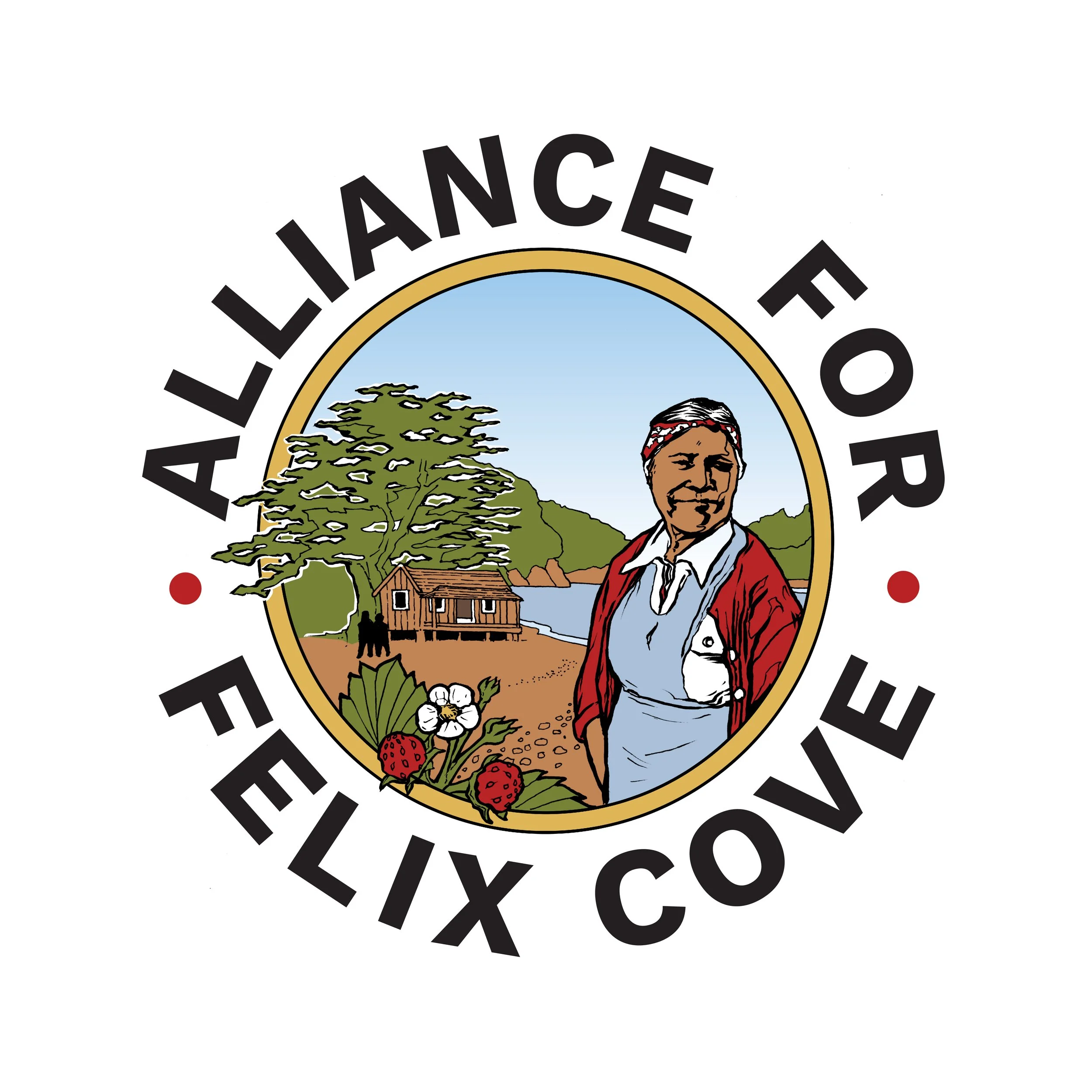
In anticipation of the Alliance’s fifth anniversary this year, we’re thrilled to share our newly-refreshed logo with help from original logo artist Weshoyot Alvitre. Our changes are intentionally subtle, they were made with clear intention: to include colors that reflect the plants at the Cove, the sky is a gradient of blues, and a stronger font as grounded as the ancestors who guide our work.
Click below to listen to our founder Theresa Harlan tell the story behind this carefully crafted
visual representation of our vision for the future of Felix Cove.
About the image: capturing the core of our vision
Indigenous women’s leadership
The image of Theresa’s beloved grandmother symbolizes the strength of all the Indigenous women who carried their ancestral ways in their everyday lives knowingly choosing difference. Their knowledge allowed their families and communities to live in their homelands without electricity and conveniences of western society.. We’re working to renew and reawaken that ancestral knowledge to protect the Cove for generations to come.
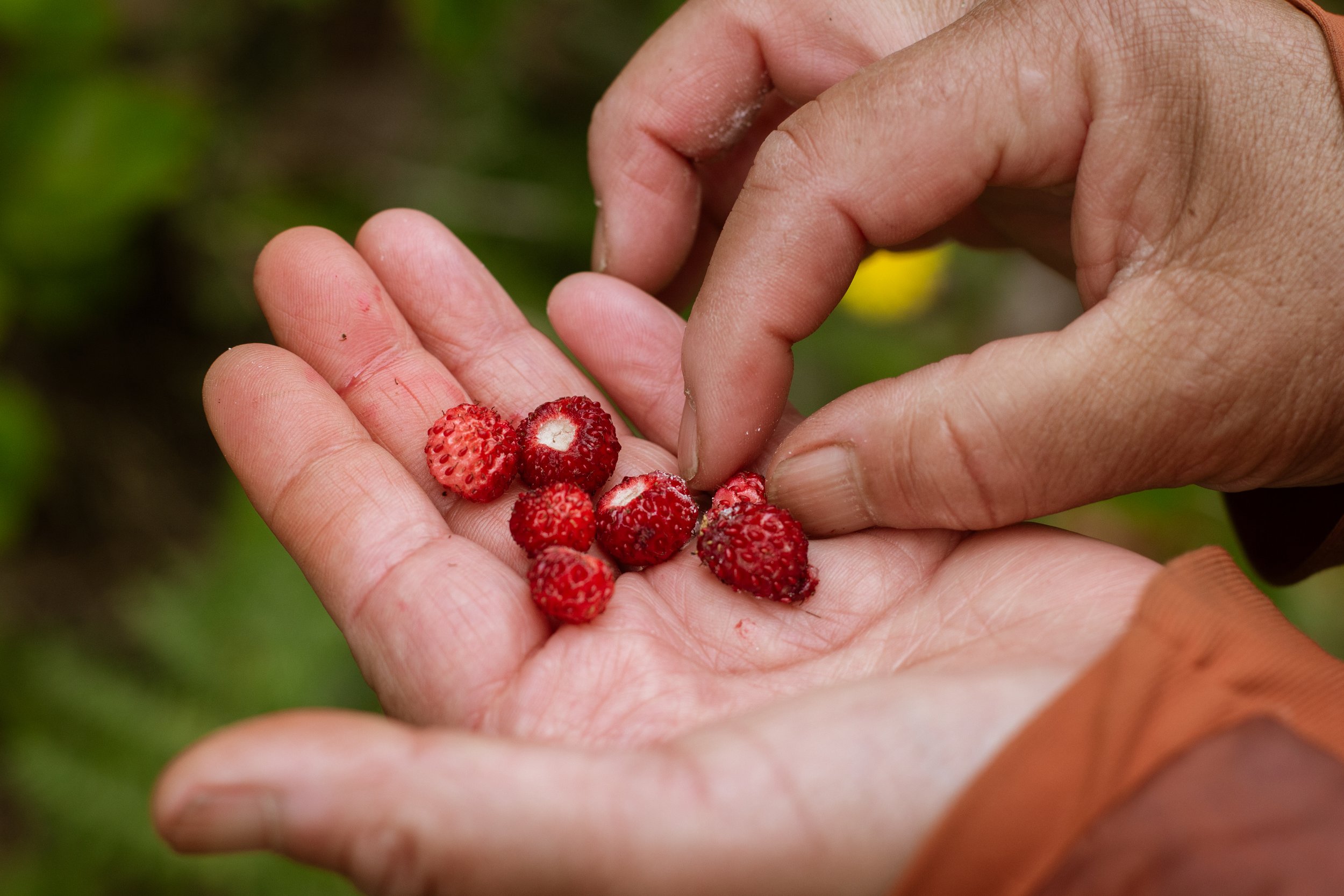
Our Plant Relatives
From strawberries to bay laurels, the Cove’s plant relatives continue to be present as our relatives. Even in dry years, strawberry plants send runners in search of nourishment, carrying forward a quiet teaching of resilience. Bay laurel leaves are aromatic and nuts can be roasted. The ancestors harvested tule from the wetlands south of the Bay. Tule is a good partner for many: it can provide homes for humans, birds, frogs, clothing for people, and canoes for navigation.
These relationships were disrupted when our people were forced to work in missions and ranches and extractive practices took hold. We’re working to return Indigenous knowledge to Indigenous hands to learn the feel of fresh tule, make cordage and canoes from harvested tule, and know the sweet grassy scent of tule.
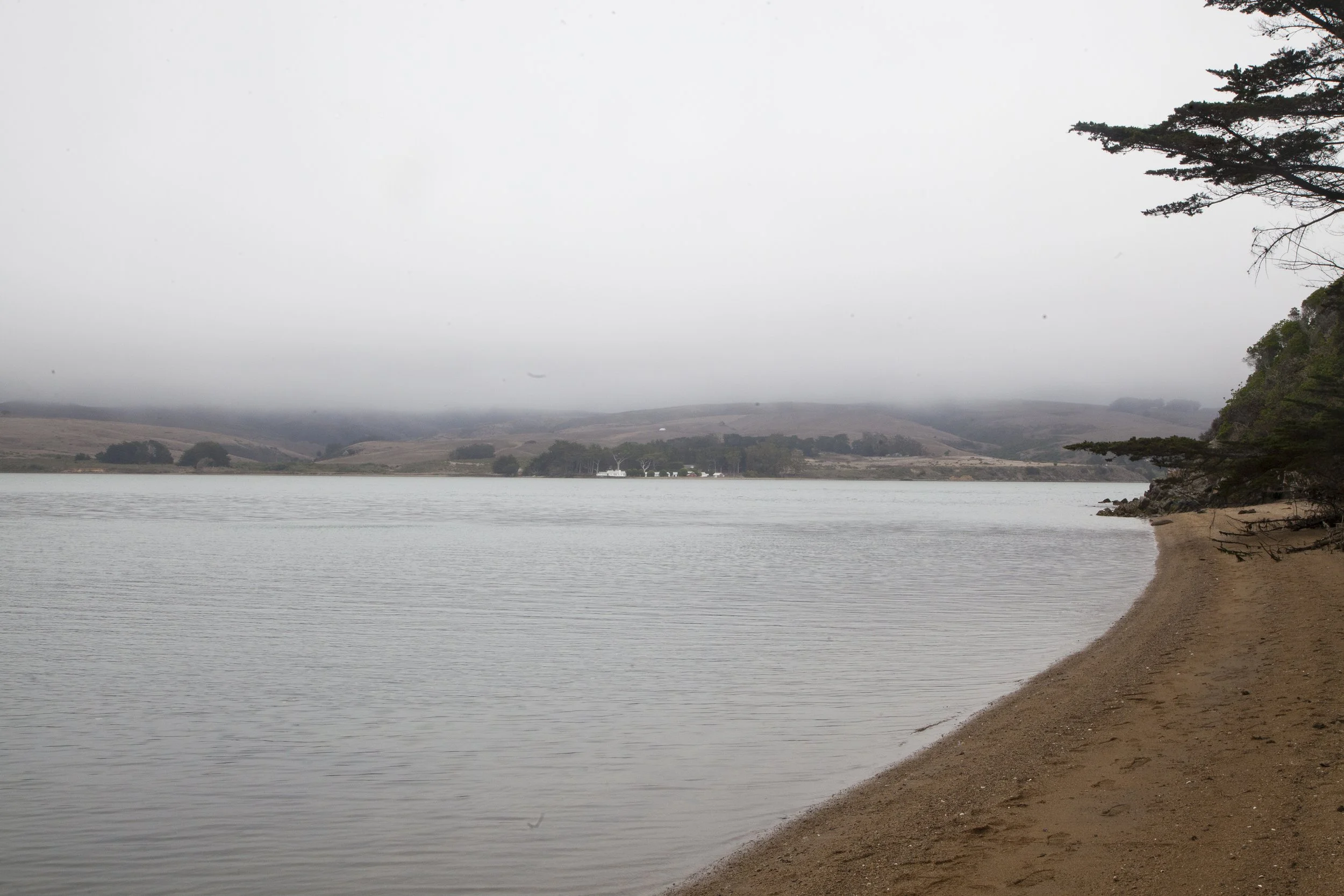
The waters of Tamal liwa (Tomales Bay)
The Bay is a living being. Our ancestors fished its waters and navigated its currents to hunt and gather supplies. Like the land, the Bay is a sacred part of our ancestral homelands. We’re working to introduce ourselves back to her, learn about her as a home and source for food and witnessthe diverse network of microorganisms, plants, jellyfish, fish, birds, bat rays, river otters, seals, and many others.
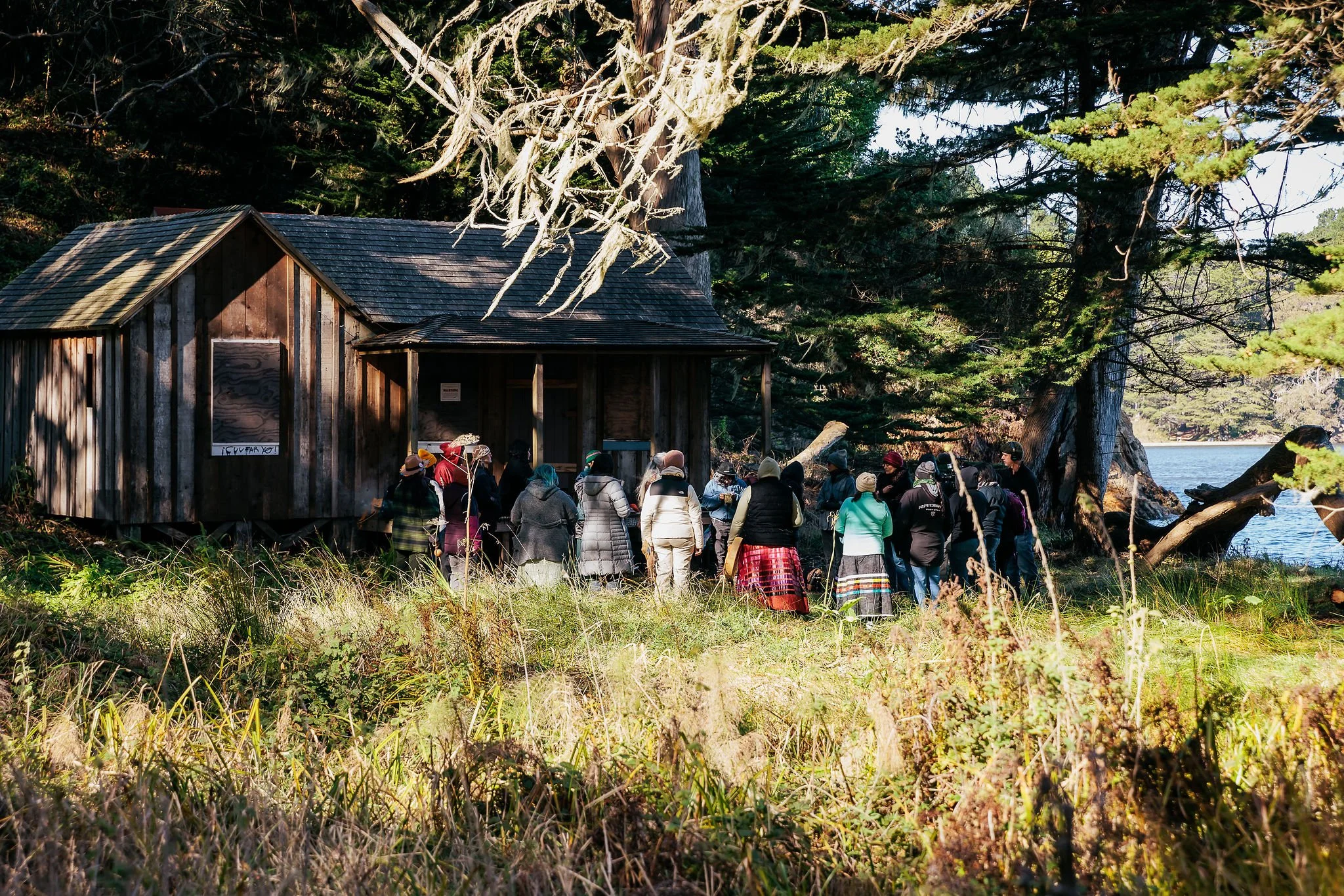
The Felix family home
The home at Felix Cove, built by Theresa’s great grandfather, stands as a symbol of continued resilience against the attempted erasure of Támal-ko people, history and culture. The house today is empty and unprotected, and has been repeatedly vandalized in recent years. We’re working to protect and share its story and expand awareness that it is a site of historic and cultural significance–and to create a community gathering space for anyone seeking to understand Indigenous history and experience–through the Felix Family story.
About the artist
Weshoyot Alvitre is a Tongva and Scottish comic book artist, writer and illustrator. She was born in the Santa Monica Mountains on the property of Satwiwa, a cultural center started by her father Art Alvitre. She grew up close to the land and was raised with traditional knowledge that inspires the work she does today. Weshoyot has been working in the comics medium for over 15 years. Her work focuses on art and writing that visualizes historical material through an Indigenous lens. She has also contributed art responses to contemporary Indigenous issues using pop-culture, sci-fi and archival research materials to spark conversations and re-frame colonial narratives.
Alvitre has made a conscious choice to work primarily within Native-owned publications and educational avenues, to further support a self-funded narrative on past, present and future native issues. It is through this voice, and through her artwork, she feels she is able to communicate her unique viewpoint and continue a strong dialogue on issues that are important to her as a Native woman.
Learn more here: https://www.weshoyot.com/